


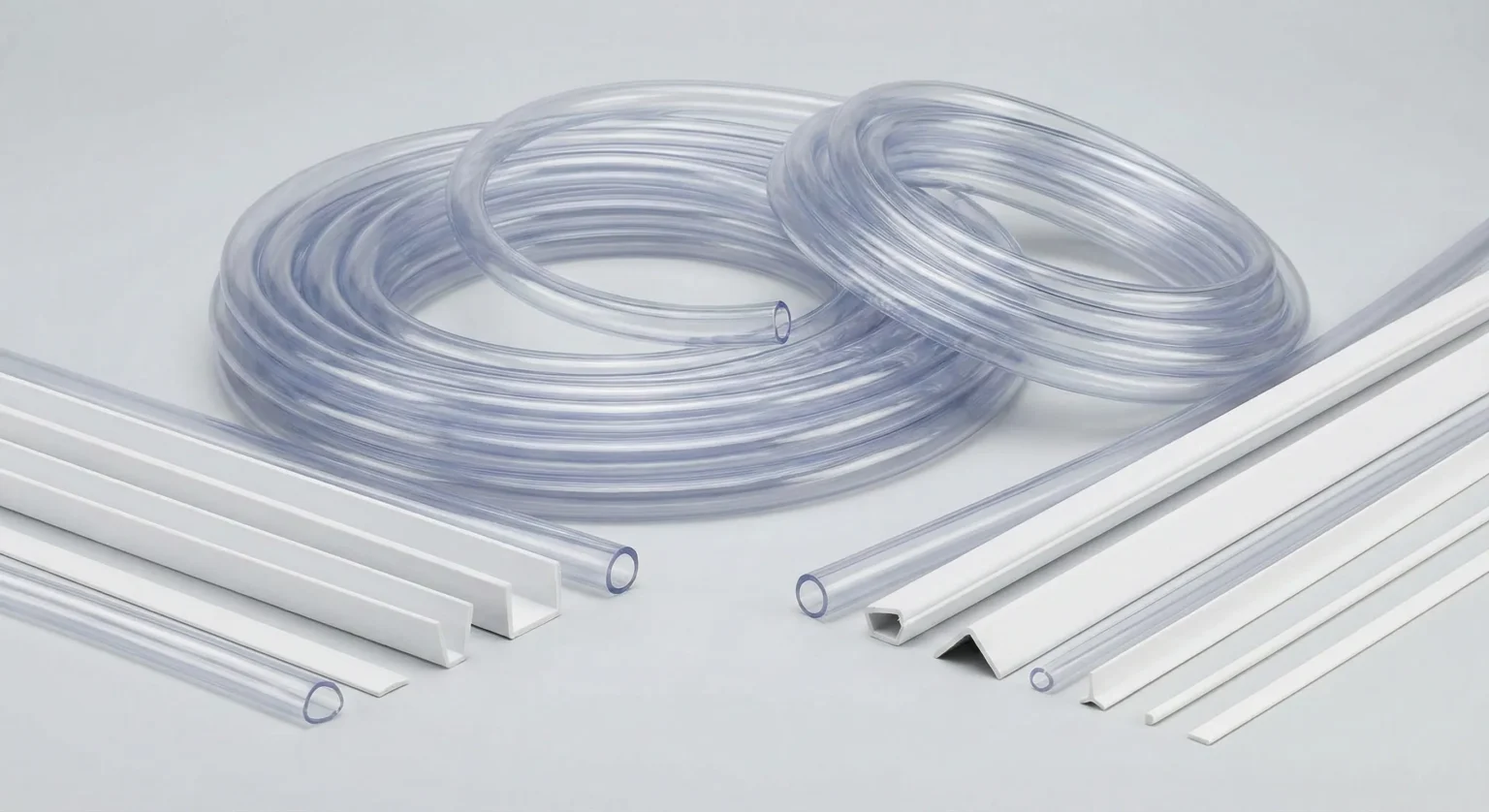
PVC (Polyvinyl Chloride) is one of the most widely used plastics worldwide. As a thermoplastic, PVC can be repeatedly reshaped by heating — enabling efficient mass production through extrusion and injection molding with consistently high quality.
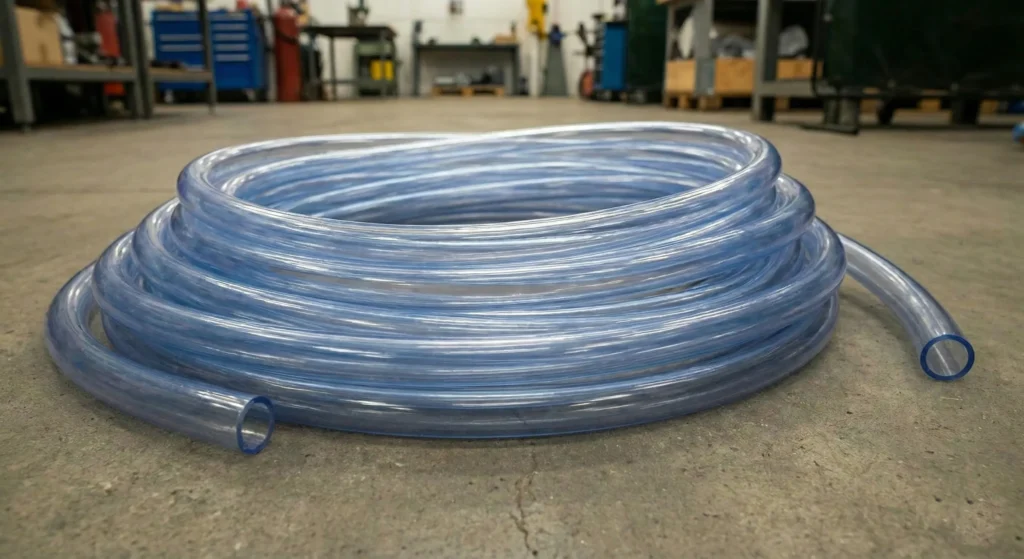
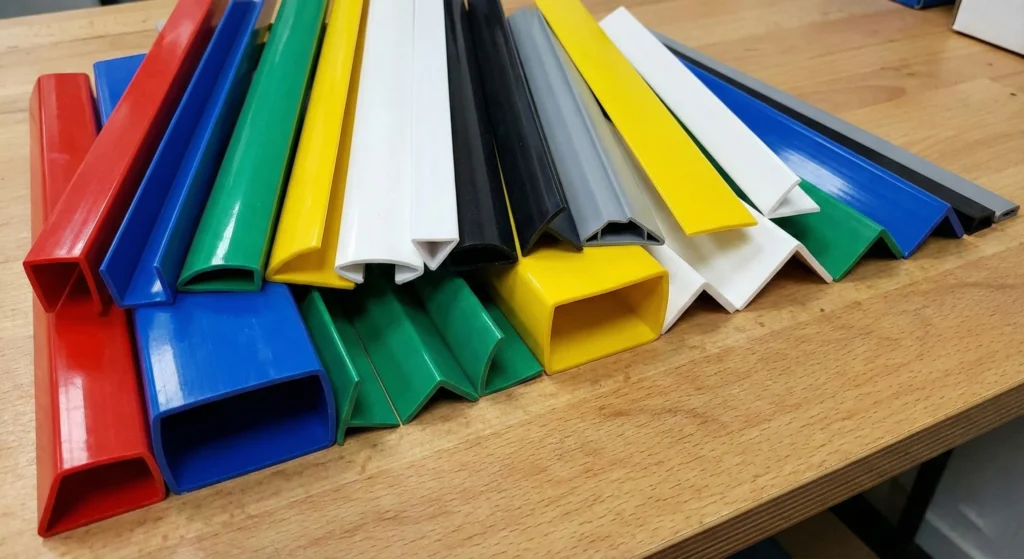
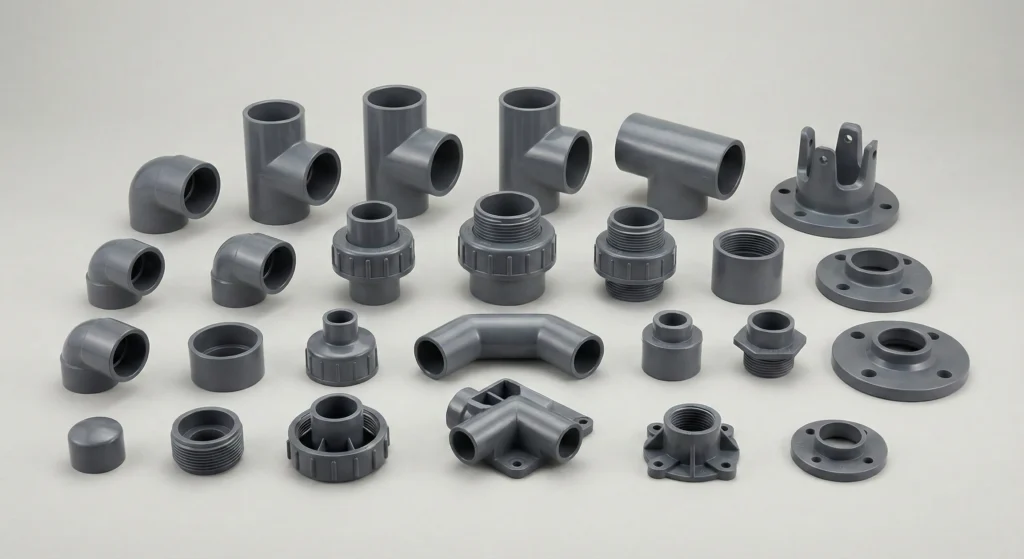
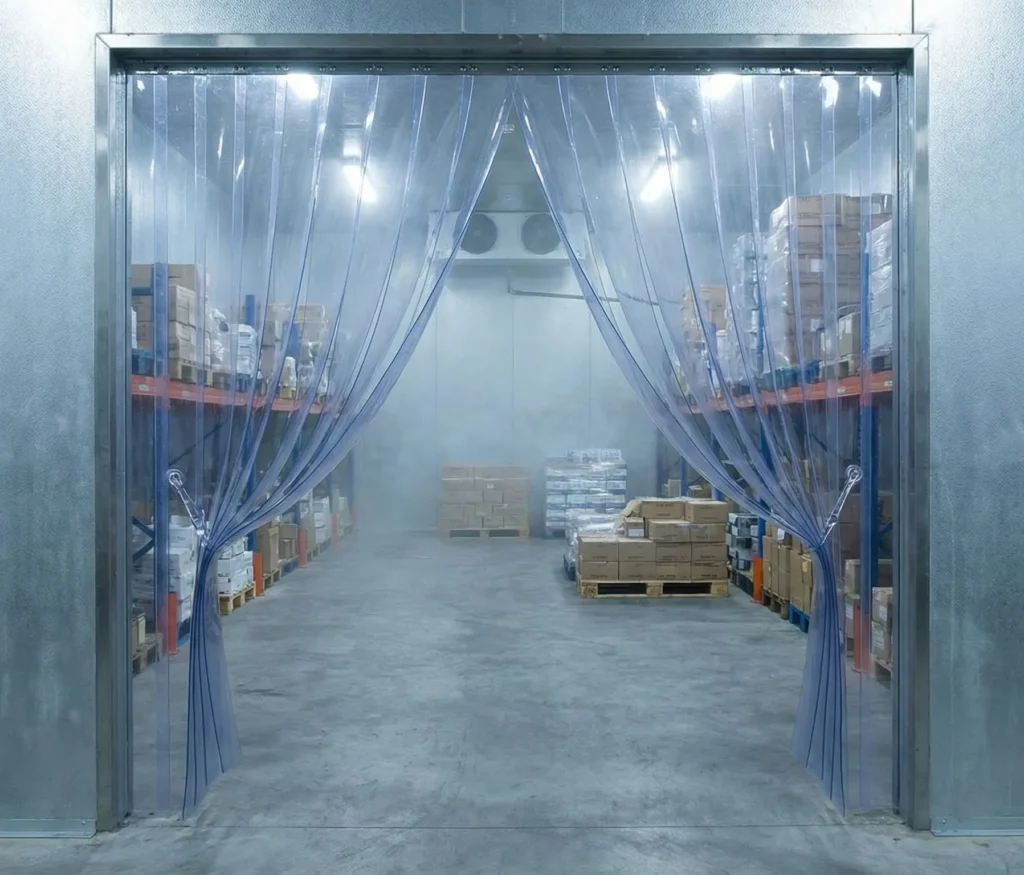
PVC exists in two basic forms: rigid PVC (PVC-U) for pipes, profiles, and window frames, and flexible PVC (PVC-P) for flexible hoses, curtains, and cable jacketing. The flexibility of flexible PVC is achieved through plasticizers — modern formulations use REACH-compliant, phthalate-free alternatives.
The outstanding chemical resistance makes PVC the first choice in the chemical industry, water treatment, and laboratory equipment. Acids, alkalis, and many industrial media have little effect on PVC.
Cost-performance ratio: PVC is one of the most affordable industrial plastics — with good resistance and long service life at the same time.
| Industry | Typical Applications |
|---|---|
| Industry & Logistics | Transparent strip curtains, welding protection curtains, ESD mats |
| Construction | Cable ducts, pipelines, window sill profiles, gutters |
| Drinking Water & Food | Drinking water pipes (rigid PVC), laboratory hoses, ventilation lines |
| Refrigeration Technology | Polar strip curtains to −40°C, swing door panels for cold rooms |
| Electrical Engineering | Cable insulation, protective hoses, insulation sheets |
| Medical Technology | Infusion tubing (conventional), blood bags, cleanroom curtains |
| Medium | Resistance | Notes |
|---|---|---|
| Water (cold) | ✅ Excellent | Rigid PVC approved for drinking water |
| Diluted acids | ✅ Excellent | Wide resistance up to 60°C |
| Concentrated acids | ✅ Good to very good | HCl, H₂SO₄, H₃PO₄ |
| Alkalis | ✅ Excellent | NaOH up to 40%, KOH |
| Alcohols | ✅ Good | Methanol, Ethanol |
| Mineral oils / greases | ✅ Good | Rigid PVC resistant, flexible PVC limited |
| Ketones (Acetone) | ❌ Not resistant | Dissolves PVC |
| Chlorinated solvents | ❌ Not resistant | THF, dichloromethane dissolve PVC |
| Ozone / UV radiation | ⚠️ Moderate | Yellowing, UV stabilizers recommended |
| Hot water / Steam | ❌ Not resistant | Softening from +60°C |
| Property | Value / Range | Standard |
|---|---|---|
| Hardness (Shore A/D) | 60–100 Shore A (flexible), 50–85 Shore D (rigid) | DIN ISO 7619-1 |
| Tensile strength | 10 – 25 MPa (flexible), 40 – 60 MPa (rigid) | DIN EN ISO 527 |
| Elongation at break | 20 – 80% (flexible), 10 – 50% (rigid) | DIN EN ISO 527 |
| Density | 1,30 – 1,45 g/cm³ | DIN EN ISO 1183 |
| Temperature range | -10°C to +60°C | — |
| Profile tolerance (Extrusion) | ±0,2 mm (Small profiles), ±0,4 mm (Large profiles) | DIN 16941 |
| Hose tolerance (ID/OD) | ±0,3 mm (Standard) | DIN EN ISO 8031 |
| Molded part tolerance | ±0,15 mm (injection molding) | DIN 16742 |
We analyze your requirements and jointly select the optimal material (TPE, EPDM, or PVC) for your specific application.
Our experts create precise profiles or molded parts based on your drawings or samples to guarantee a perfect fit.
After precision production, we ensure fast delivery of your finished components – directly to your desired date and location
What is the difference between rigid PVC and flexible PVC?
Rigid PVC (PVC-U) contains no plasticizers and is stiff and dimensionally stable — ideal for pipes, profiles, and window frames. Flexible PVC (PVC-P) contains plasticizers (phthalates or phthalate-free alternatives) and is flexible — used for hoses, curtains, and cable jacketing.
Are PVC plasticizers a health concern?
Traditional phthalate plasticizers (e.g., DEHP) have come under criticism. Modern formulations use REACH-compliant, phthalate-free alternatives such as DINCH, DOTP, or citrate esters. For critical applications (food, medical), we recommend TPE as a plasticizer-free alternative.
Up to what temperature can PVC be used?
Rigid PVC is suitable for continuous use up to approx. +60°C and softens from +80°C. Flexible PVC becomes increasingly softer from +50°C. For higher temperatures, we recommend EPDM (up to +150°C) or silicone (up to +230°C).
Why does PVC turn yellow outdoors?
UV radiation breaks the chlorine-carbon bonds in the PVC molecule, leading to the formation of conjugated double bonds and thus yellowing. UV stabilizers can significantly delay this effect but cannot completely prevent it.
Is PVC recyclable?
Yes, PVC is thermoplastic and therefore fundamentally recyclable. Rigid PVC is well recycled industrially (e.g., old window frames). Recycling flexible PVC is more complex due to the plasticizers. The VinylPlus initiative of the European PVC industry has significantly increased recycling rates.
Can PVC be used for drinking water pipes?
Rigid PVC (PVC-U) is approved and widely used for drinking water pipes in many countries. Flexible PVC hoses are only conditionally suitable for drinking water, as plasticizers may migrate into the water.
Which chemicals attack PVC?
PVC is resistant to most acids, alkalis, and salt solutions. Problematic are: ketones (acetone), chlorinated solvents (THF, dichloromethane), aromatic hydrocarbons (toluene, xylene), and esters. These dissolve PVC or cause severe swelling.
Is PVC flame retardant?
Yes, PVC has a high chlorine content (~57%) and is therefore inherently flame retardant (oxygen index ~45%). It self-extinguishes after removal of the flame. However, combustion can release hydrochloric acid (HCl).
Cookie Settings
We use cookies to provide you with an optimal website experience. This includes technically necessary cookies and cookies for analysis purposes (Google Analytics). You can decide which categories to allow. More information in our Privacy Policy.
We support companies across industries with custom solutions in EPDM, PVC and TPE. Send us your inquiry — we’ll get back to you quickly.
✓ Response within 24h · No spam · +49 1705587294
✓ Response within 24h · +49 1705587294