


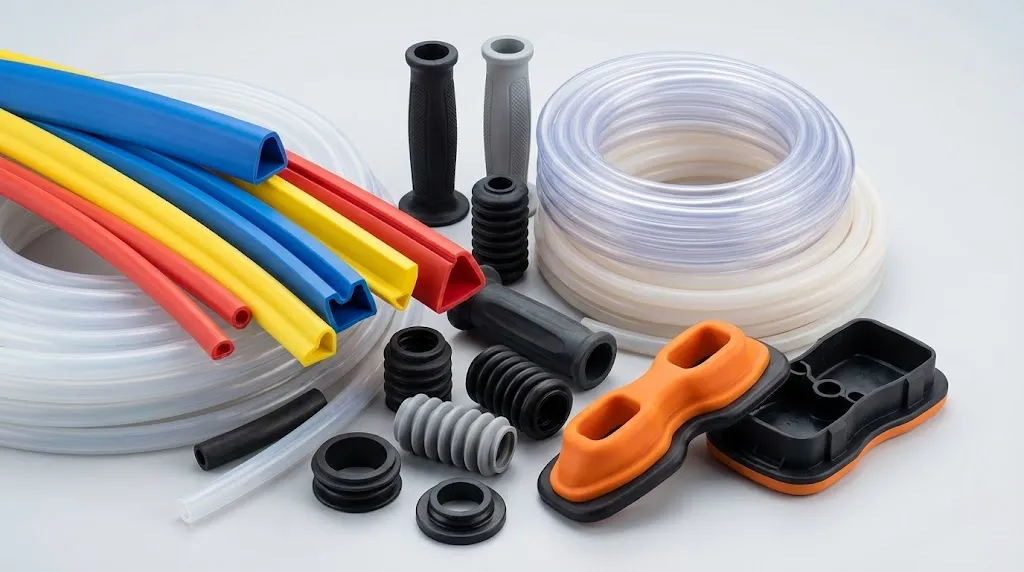
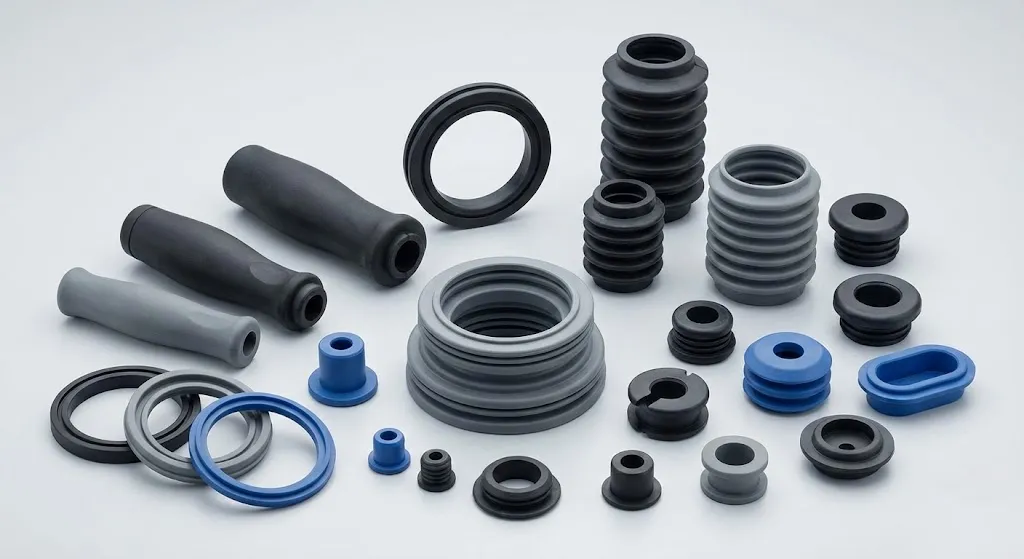
TPE (Thermoplastic Elastomers) combine the elasticity of rubber with the processability of thermoplastics. This means: rubber-like feel and flexibility, but manufacturable using efficient injection molding or extrusion processes — without the time-consuming vulcanization of classic elastomers.
The TPE family includes various types: TPE-S (styrene-based, soft-touch), TPE-V (vulcanized, high temperature and oil resistance), TPE-O (olefin-based, automotive), TPE-U (urethane-based, abrasion resistance), and TPE-E (copolyester, chemical resistance).
A decisive advantage: TPE is thermoplastically reprocessable; end-of-life recycling depends on grade, separation and the available recycling stream. Production waste can be directly reused, scrap is minimized. Additionally, TPE is plasticizer-free — a growing advantage in regulated industries (REACH, RoHS, FDA).
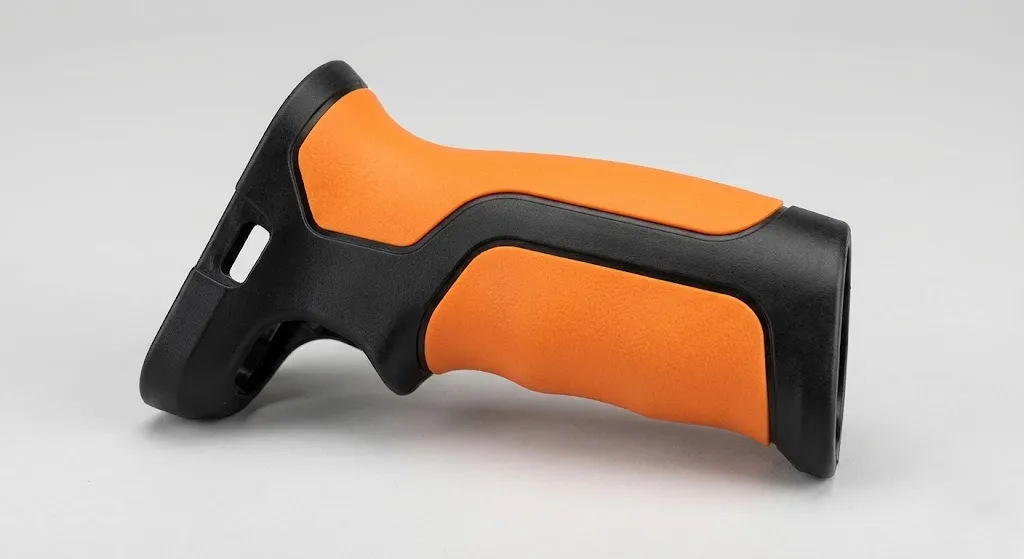
Special strength: 2K injection molding (hard-soft bonding) — TPE bonds directly to PP, PE, or ABS without adhesive. Ideal for grips, housings, and ergonomic products.
| Industry | Typical Applications |
|---|---|
| Automotive | Glass run channels, soft-touch interior, door seals, 2K grips |
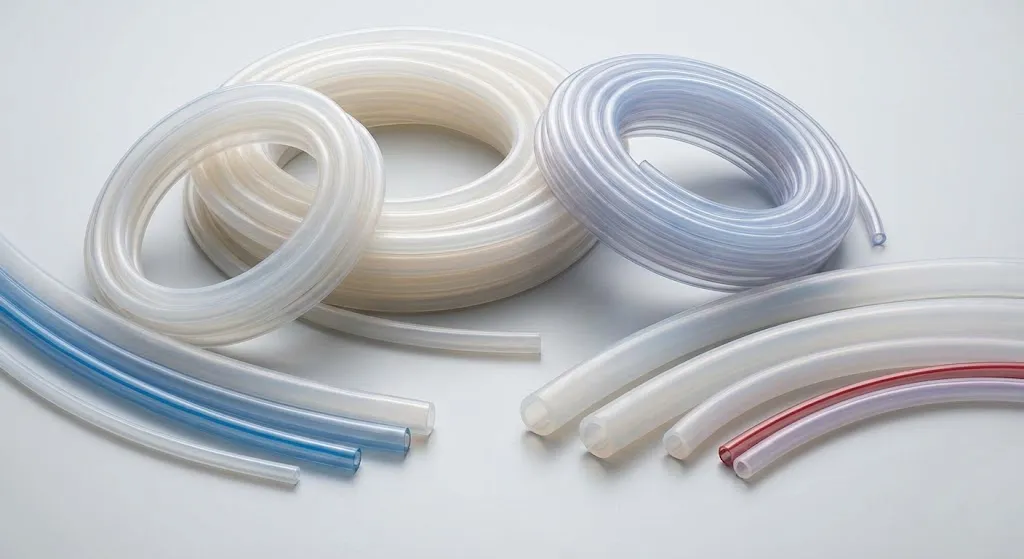
| Medical Technology | DEHP-free infusion tubing, wearables, dialysis lines, pump hoses |
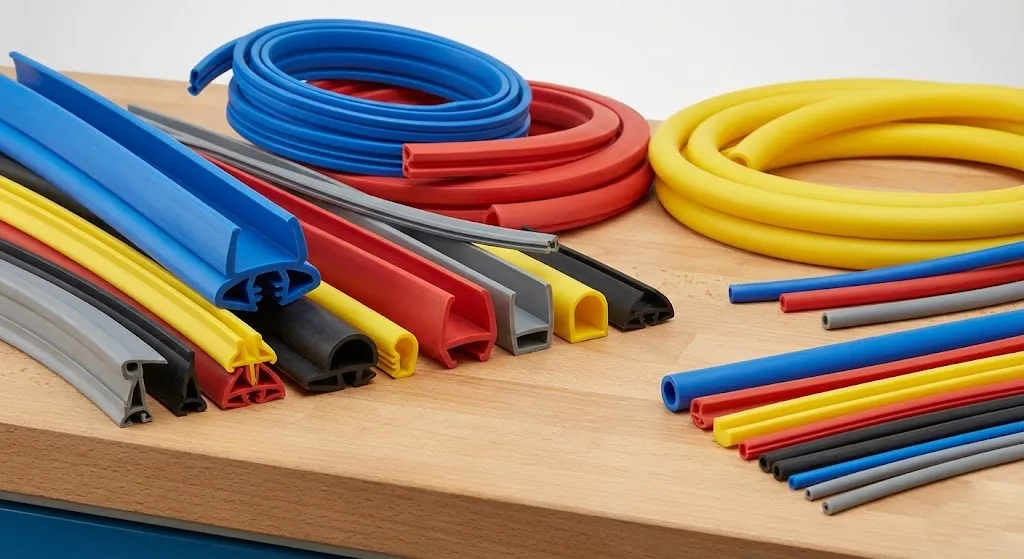
| Construction | Weldable window seals (TPE-V), finger protection systems |
| Sanitary & Food | Overmolding for faucets, shower head seals, seals made from selected grades with FDA/EU evidence |
| Renewable Energy | Flexible connector seals, cable entries, overmolding |
| Industry | Antistatic components, flexible machine covers |
| Medium | Resistance | Notes |
|---|---|---|
| Water (cold/warm) | ✅ Good to very good | Up to +80°C, depending on TPE type |
| Diluted acids | ✅ Good | TPE-V better than TPE-S |
| Diluted alkalis | ✅ Good | Resistant as standard |
| Alcohols | ⚠️ Conditional | Short-term OK, long-term varies |
| Mineral oils / greases | ⚠️ Varies | TPE-V good, TPE-S limited |
| Fuels | ⚠️ Conditional | Only special TPE-V compounds |
| UV radiation | ✅ Good | Excellent with UV stabilizers |
| Ketones / Esters | ❌ Not resistant | Swelling and loss of strength |
| Steam / Hot water | ⚠️ Conditional | Only TPE-V up to +120°C |
| Food contact | ✅ Good | selected grades with application-specific FDA/EU documentation available |
Indicative material-selection values; the selected grade/article data sheet and test report govern. Resistance must be checked for medium, concentration, temperature and contact time.
| Property | Value / Range | Standard |
|---|---|---|
| Hardness (Shore A) | 5 – 95 ±3 | DIN ISO 7619-1 |
| Tensile strength | 2 – 25 MPa (depending on type) | DIN 53504 |
| Elongation at break | 200 – 800% | DIN 53504 |
| Compression set (DVR) | 20 – 50% (72h/70°C) | DIN ISO 815 |
| Density | 0.90 – 1.30 g/cm³ | DIN EN ISO 1183 |
| Temperature range | family- and grade-dependent; many TPE-S grades up to approx. +100°C, selected TPV/TPE-V grades up to approx. +135°C; higher values only when supported by a data sheet | — |
| Injection molding tolerance | ±0.1 mm (Class TG5) | DIN 16742 |
| Profile tolerance (extrusion) | ±0.3 mm (Standard) | ISO 3302-1 E2 |
| Shrinkage (injection molding) | 1.5 – 2.5% | Compound-dependent |
We analyze your requirements and jointly select the optimal material (TPE, EPDM, or PVC) for your specific application.
Our experts create precise profiles or molded parts based on your drawings or samples to guarantee a perfect fit.
After precision production, we ensure fast delivery of your finished components – directly to your desired date and location
What exactly is TPE and how does it differ from rubber?
TPE (Thermoplastic Elastomer) combines the elasticity of rubber with the processability of plastic. Unlike classic rubber (thermoset), TPE does not need to be vulcanized — it is processed by injection molding or extrusion, is thermoplastically reprocessable and often enables shorter production cycles; recycling depends on the available stream.
What types of TPE are there and when is each used?
The main TPE families are: TPE-S (styrene-based, soft-touch, consumer goods), TPE-V/TPV (dynamically vulcanized, automotive, high temperature), TPE-O (olefin-based, automotive, cost-effective), TPE-U (urethane-based, high abrasion), TPE-E (copolyester, chemicals). Selection depends on temperature, media resistance, and mechanical requirements.
Can TPE replace classic rubber (EPDM, NBR)?
In many applications yes — especially for seals, profiles, and molded parts. Advantages: no vulcanization; thermoplastic reprocessing and 2K injection molding are possible depending on the grade. Limitations: at very high temperatures (>120°C), extreme compression set, or continuous loading, classic rubber may be superior.
What is 2K injection molding and why is TPE ideal for it?
In 2K injection molding (multi-component injection molding), two materials are joined in one operation — e.g., a rigid core (PP, ABS) with a soft TPE overmold. TPE bonds directly to many thermoplastics without adhesive or primer. This enables soft-touch grips, ergonomic housings, and watertight connections in a single step.
Is TPE approved for medical applications?
ISO 10993 or USP Class VI data and application-specific regulatory documents may be available for selected medical TPE grades. Suitability and regulatory assessment of the finished medical device remain necessary; DEHP-free grades are available.
How sustainable is TPE?
TPE is thermoplastically reprocessable; end-of-life recycling depends on grade, separation and the available recycling stream — clean, single-grade production scrap can be reprocessed under suitable controls. It is available in selected plasticizer-free and halogen-free grades, which simplifies REACH and RoHS compliance. Energy and environmental effects must be assessed for the specific process and part.
What Shore hardness levels are possible with TPE?
A broad hardness range is available depending on the TPE family and grade: from super-soft 10 Shore A (gel-like) to hard 95 Shore A (almost like rigid plastic). This range makes it possible to cover everything from soft grips to stiff seals with a single material.
How does TPE perform in cold conditions?
Many TPE grades remain flexible to about −40°C; lower service limits are data-sheet-dependent — significantly better than PVC or many standard rubbers. Special TPE compounds can even be used down to −60°C, making them ideal for refrigeration technology and outdoor applications.
Cookie Settings
We use cookies to provide you with an optimal website experience. This includes technically necessary cookies and cookies for analysis purposes (Google Analytics and our own cookie that records through which channel you reached us, so we can attribute inquiries correctly). You can decide which categories to allow. More information in our Privacy Policy.
We support companies across industries with custom solutions in EPDM, PVC and TPE. Send us your inquiry — we’ll get back to you quickly.
✓ Response within 24h · No spam · +49 1703121531
✓ Response within 24h · +49 1703121531